
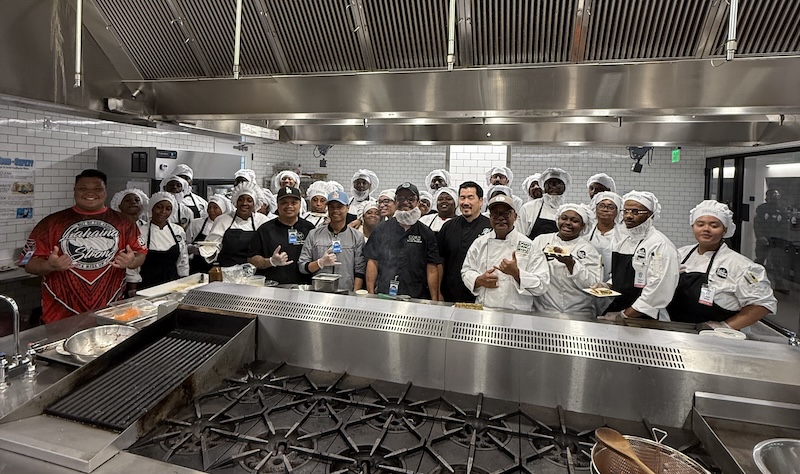
How Hawaii Food & Wine Festival chefs transformed a culinary demonstration into a lesson in culture, connection, and possibility.
Some of the most meaningful lessons in a culinary classroom aren’t found in a recipe.
They’re found in the stories behind the ingredients, the conversations around the cutting board, and the moment an unfamiliar flavor becomes an introduction to another culture.
Sometimes, it’s the beginning of seeing the world a little differently.
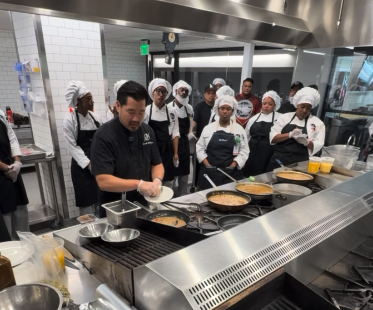
That was the spirit behind a special chef demonstration held during Hawaii Food & Wine Festival’s time at Hawaii on the Hill, when chefs Joey Macadangdang of Dang Dang Noodle and Garrett Mukogawa, Corporate Executive Chef of Roy’s Hawaii, visited Class 181 of DC Central Kitchen’s Culinary Job Training Program in Washington, D.C.
DC Central Kitchen (DCCK) is a nationally recognized nonprofit organization and social enterprise that uses food as a pathway to opportunity. Through its Culinary Job Training Program, individuals rebuilding their lives after barriers such as incarceration, homelessness, long-term unemployment, and other systemic challenges receive hands-on culinary training, professional mentorship, and career placement support as they prepare for careers in hospitality.
For these students, every guest chef brings technical knowledge and industry experience. But when those chefs travel more than 5,000 miles from Hawaii carrying ingredients, stories, and traditions rooted in the islands, the classroom becomes something more than a place to learn techniques. It becomes a place for cultural exchange.
The demonstration reflected Hawaii’s diversity and sense of place. Chef Macadangdang prepared a seared ahi crusted with wasabi peas, sharing not only the technique behind the dish but also the personal journey that shaped his cooking. Chef Mukogawa followed with poached Kauai shrimp, introducing students to ingredients that represent the quality and abundance of Hawaii’s land and sea. For many students, it was their first time tasting raw fish, and for others, their first encounter with flavors from the islands. There was curiosity. A little hesitation. Plenty of questions. And, ultimately, excitement.
But what the chefs shared wasn’t simply a recipe. They shared perspective. The demonstration became an opportunity to talk about family, culture, tradition, and place. Students learned how Hawaii’s many cultures continue to shape its cuisine, why local ingredients matter, and how every chef carries their own story into the kitchen.
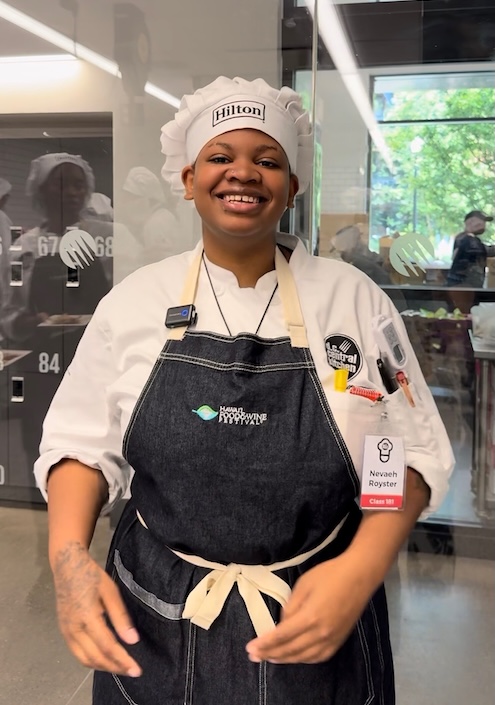
For culinary student Nevaeh Royster, the experience reached beyond the day’s lesson.
“It made me want to get out and travel the world to experience what other cultures are out there.”
Her words captured the true impact of the morning.
The success of a chef demonstration isn’t measured by whether every student masters a technique or remembers every ingredient. It’s found in the curiosity that follows—the confidence to ask questions, the willingness to try something unfamiliar, and the realization that every cuisine tells the story of the people and places that shaped it. For Class 181, Hawaii became more than a place on a map. It became something they could taste.
In a kitchen classroom in Washington, D.C., filled with students rebuilding their lives through culinary training, two chefs from Hawaii demonstrated something far greater than culinary technique. They showed that when food, culture, and community are shared openly, they have the power to open doors—to new careers, new perspectives, and new possibilities. For many, it was their first taste of Hawaii. But perhaps more importantly, it was an invitation to imagine a world beyond the one they already knew.
The morning ended with new culinary skills, unfamiliar flavors, and lasting memories. But it also left something more enduring: inspiration—the kind that begins with curiosity, grows through connection, and reminds us that every bite has the power to expand someone’s world.